

The incident took place at the closing ceremony of International Film Festival of India (IFFI) 2025 in Goa, on November 30.
On stage, Ranveer attempted to pay tribute to Rishab Shetty — star and director of Kantara: Chapter 1 — by mimicking a dramatic “Daiva” (spirit-possession / deity-invocation) scene from the film.
In doing so, he referred to the “daiva” as a “female ghost.” He even mimicked the possessed look — crossed eyes, tongue out — while imitating the scene.
He also joked on stage, pointing at Rishab Shetty, and said something like: “Anybody here want to see me in Kantara 3?” — which many saw as tone-deaf in context.
According to reports, before he started the mimicry, Rishab Shetty had apparently asked him not to do it. But Ranveer went ahead anyway.
Because the “Daiva” — including the particular “Chamundi Daiva / Chaundi Daiva / local spirit/deity” in the film — represents a sacred spiritual tradition for certain communities (especially the coastal Karnataka and Tulu-speaking communities), many perceived the act and the language (“female ghost”) as disrespectful to their beliefs.
Public reaction & backlash
Soon after the video clips spread, a wave of criticism flooded social media. Some called his mimicry and remarks “insensitive,” “disrespectful,” and “tone-deaf.”
Users wrote things like: “How can actors lack basic understanding of what should and shouldn’t be said? It is extremely disrespectful for people from the South that their goddess is being referred to as a female ghost.”
Many felt that dubbing a deity/daiva as a “ghost,” then performing an exaggerated imitation in public — wearing shoes (during a spiritual representation) — was insensitive.
Beyond social media, the backlash escalated into formal complaint territory: Hindu Janajagruti Samiti (HJS) filed a complaint, accusing Ranveer of insulting a deity (Chamundi Daiva) depicted in the film — calling his act derogatory and offensive. The group demanded a public apology and urged the organizers of IFFI to ensure no religious figure is mocked at future events.
The controversy stirred a broader debate over cultural sensitivity, especially when mainstream film-industry actors reference or depict local/regional spiritual traditions. Many argued this incident shows how easily such traditions can be misunderstood or misrepresented by outsiders and stars who don’t share those cultural roots.
Ranveer Singh’s Apology & Response
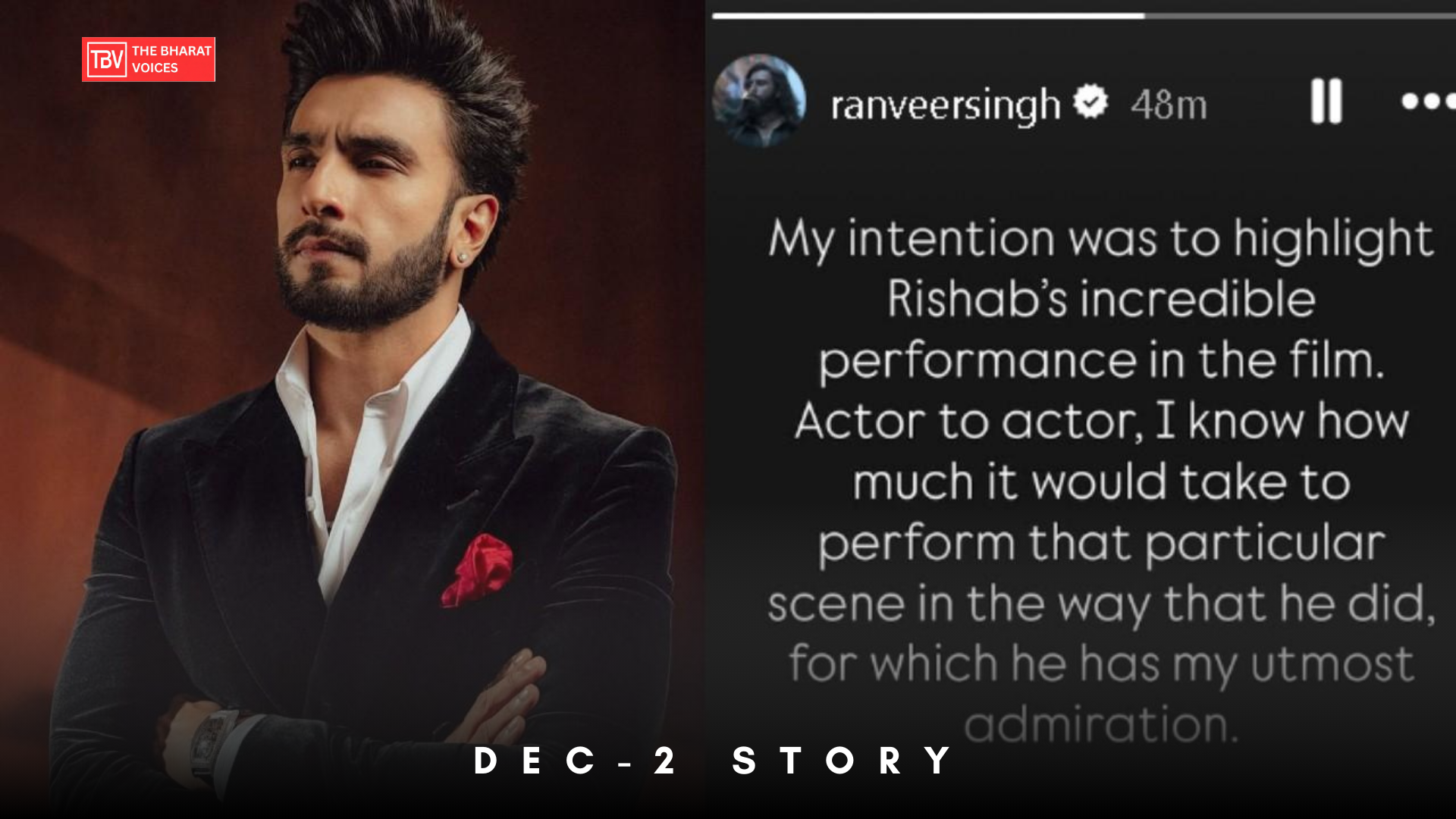
On December 2, 2025, Ranveer posted an apology on his Instagram Stories. He wrote:
> “My intention was to highlight Rishabh’s incredible performance in the film.”
He continued, “I have always deeply respected every culture, tradition, and belief in our country. If I’ve hurt anyone’s sentiments, I sincerely apologize.”
In his apology, he emphasized that his mimicry was meant as a tribute — not disrespect.
The apology comes just a few days before release of his next film, Dhurandhar (releasing this week), which adds to the controversy’s significance for his image and the film’s reception.
Cultural & Broader Context
The “daiva” or “spirit-deity” tradition depicted in Kantara is rooted in a real folk-religious practice among certain communities — it’s not just a fictional “ghost story.” So referring to it as a “ghost” and joking about it publicly felt deeply offensive to many.
Critics of the act say this incident underscores a problem: sometimes Bollywood or pan-India entertainers may not fully understand or respect regional cultural and religious traditions — and in doing so, inadvertently hurt sentiments.
Because the controversy happened at a national-level event (IFFI), with a big name attempt — this has sparked calls for more cultural awareness and sensitivity whenever deities or traditional rituals are depicted or referenced publicly.
