

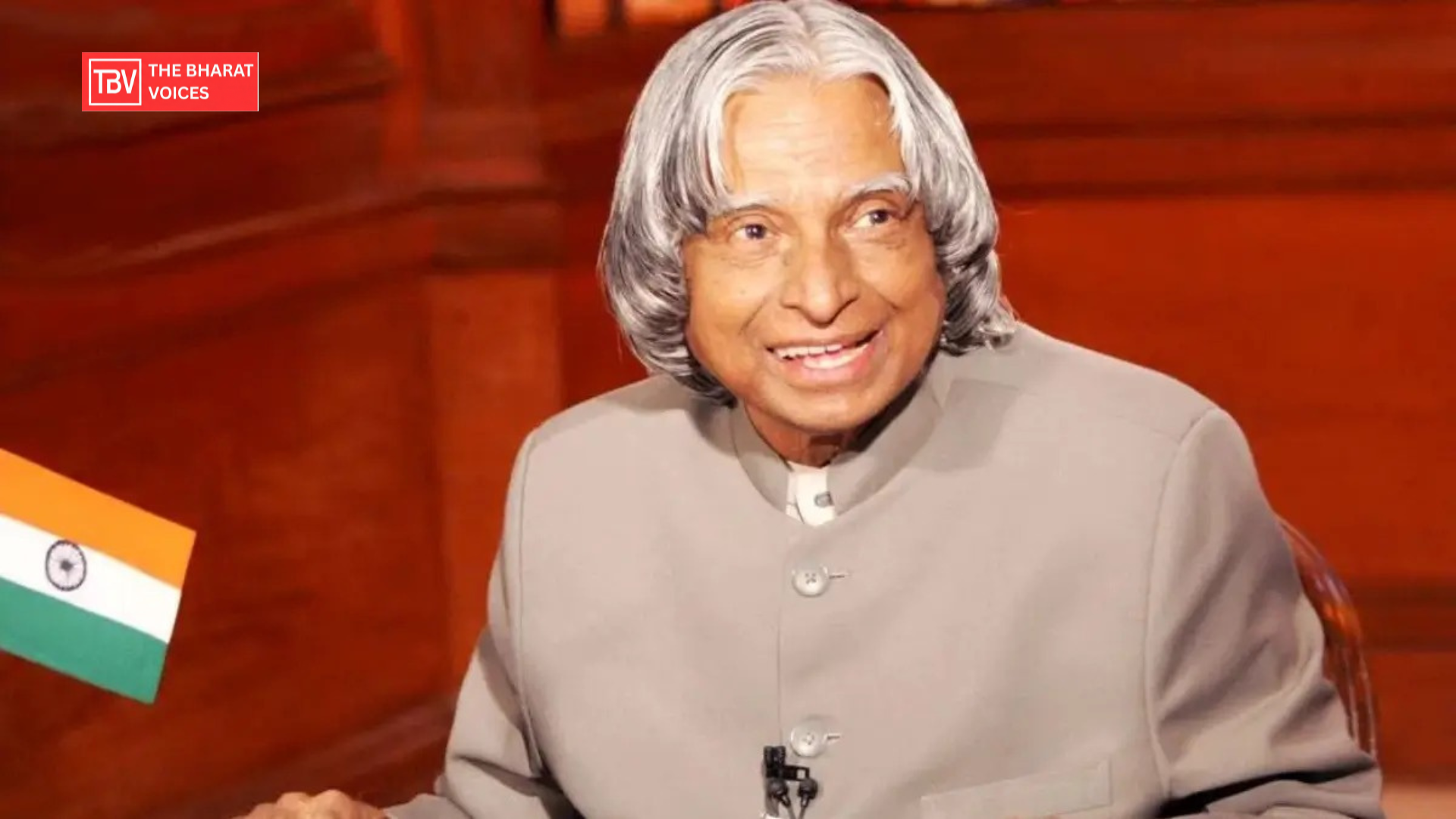
Dr. A.P.J. Abdul Kalam is remembered as one of India’s most admired leaders — a scientist, a teacher, a visionary thinker, and a humble human being. His journey from a small coastal town in Tamil Nadu to becoming the 11th President of India is proof that hard work, discipline, and a deep commitment to learning can overcome any barrier. More than a scientist, Kalam became a symbol of hope, encouragement, and inspiration for millions of students across India.
This detailed biography covers his early life, education, scientific milestones, presidency, writings, philosophy, and the timeless lessons we can learn from his extraordinary life.
⭐ Early Life and Family Background
Avul Pakir Jainulabdeen Abdul Kalam was born on 15 October 1931 in Rameswaram, a serene island town in Tamil Nadu known for its temples, quiet beaches, and cultural traditions. His father, Jainulabdeen, owned a small boat and served as the imam at a local mosque. His mother, Ashiamma, balanced the household with kindness and strength. Though the family lived modestly, they nurtured strong values: honesty, humility, and respect for all.
Kalam often recalled how his parents taught him by example rather than lectures. Their disciplined lifestyle and peaceful approach to life influenced him deeply. As a child, he supported his family by selling newspapers early in the morning, but he never allowed financial challenges to stop his education. He had a natural love for learning, especially mathematics, physics, and the mysteries of the universe.
⭐ Education and the Making of a Scientist
Dr. Kalam studied at Schwartz Higher Secondary School in Ramanathapuram. He was not born a genius — in fact, he described himself as an average student who improved through sheer determination and curiosity. What set him apart was his willingness to learn from mistakes and his hunger for knowledge.
He then attended St. Joseph’s College, Tiruchirappalli, where he graduated in physics. This was the period when India was a young nation building its scientific foundations. Inspired by the works of great Indian scientists, Kalam decided that he wanted to contribute to India’s technical and scientific development.
To pursue this dream, he joined the Madras Institute of Technology (MIT) to study aerospace engineering. His time at MIT transformed him. He worked relentlessly, often late into the night, building models, experimenting, and learning how aircraft and rockets function. His professors quickly noticed his talent and drive.
One famous story from this time describes how Kalam was once falling behind on a major project. His professor challenged him to complete it within a tight deadline or risk losing his scholarship. Kalam accepted the challenge and worked tirelessly, completing the project ahead of time. This moment became a turning point, reinforcing his belief in discipline and perseverance.
⭐ Early Career — Joining DRDO and ISRO
After graduating, Kalam joined the Defence Research and Development Organisation (DRDO). His first work involved designing small aircraft and assisting in defense-related research. Though the job was respectable, Kalam felt his talents would be better used in space research.
His major breakthrough came when he moved to the Indian Space Research Organisation (ISRO). At ISRO, he became part of the historic team working on India’s first Satellite Launch Vehicle (SLV-3). The project had many ups and downs, including failed tests, technical challenges, and moments of doubt. But Kalam never stopped learning and motivating his colleagues.
Finally, in 1980, the SLV-3 successfully placed the Rohini satellite into orbit, marking India’s entry into the group of countries with satellite launch capabilities. This achievement elevated Kalam’s reputation nationally and internationally.
Kalam often described ISRO as the place where he learned the importance of teamwork. He saw how hundreds of engineers, working with limited resources, could achieve world-class results through cooperation and dedication.
⭐ The Missile Program and the Rise of the “Missile Man”
After the success at ISRO, Kalam returned to DRDO to lead India’s missile development programs. This was a period when India was aiming for technological self-reliance, especially in defense.
Under his leadership, India developed:
-
Prithvi missile
-
Agni missile series
-
Tactical guided weapons
-
Indigenous propulsion technologies
These achievements helped India develop strategic defense strength and reduced dependence on foreign technologies. The media soon began calling him “The Missile Man of India.”
However, Kalam never viewed this title as a personal award. He always credited his teams, officers, and young scientists who worked under him. His humility remained intact even during his most celebrated achievements.
⭐ Pokhran-II: A Defining Moment in Indian History
In 1998, India conducted Pokhran-II, a series of nuclear tests that established the country as a nuclear-capable nation. These tests were conducted under absolute secrecy with coordination between political leaders, military teams, and scientific experts.
Dr. Kalam served as the Chief Project Coordinator for the scientific aspects of the mission. His leadership ensured:
-
flawless planning
-
safety of the operation
-
successful execution
The tests significantly changed India’s geopolitical position, marking a major milestone in the country’s strategic defense roadmap.
⭐ Public Life and the People’s President (2002–2007)
In 2002, Dr. APJ Abdul Kalam was elected as the 11th President of India. His presidency was unique because he was not a politician but a scientist and teacher loved by students.
During his term:
-
He encouraged scientific thinking
-
Frequently visited schools and colleges
-
Interacted directly with children
-
Delivered inspirational speeches on dreams and development
-
Promoted India’s transformation into a “knowledge superpower”
He rejected the formal distance usually associated with political roles and instead chose to stay connected with ordinary citizens. Because of his kindness and accessibility, he earned the title “People’s President.”
Kalam’s vision documents — especially India 2020 — inspired millions to imagine a developed and technologically advanced India.
⭐ Books and Writings — Igniting Minds Across Generations
Dr. Kalam was a prolific writer. His books combined science, philosophy, and motivation. Some of his most influential works include:
1. Wings of Fire
An autobiography that highlights his childhood, struggles, and scientific career.
2. Ignited Minds
Encourages young Indians to believe in themselves and dream beyond limitations.
3. India 2020
A strategic vision of how India can become a developed nation.
4. My Journey
A reflection on important moments from his life.
5. Transcendence
A spiritual book discussing his relationship with philosopher Pramukh Swami Maharaj.
His writing style was simple yet powerful, making complex ideas accessible to students.
⭐ Teacher at Heart — Passion for Youth and Education
After completing his presidency, Kalam returned to what he loved most: teaching. He became a visiting professor at:
-
IIM Shillong
-
IIM Ahmedabad
-
IIM Indore
-
Anna University
-
Several IITs
-
Many smaller institutions and colleges
Kalam believed that students were the real strength of the nation. He often said:
“Dreams are not those that you see while sleeping. Dreams are those that do not let you sleep.”
He devoted his final years to interacting with young minds, answering questions, and encouraging them to think boldly and creatively.
⭐ Awards and National Honors
Dr. APJ Abdul Kalam received some of India’s most prestigious awards, including:
-
Bharat Ratna (1997) — India’s highest civilian honor
-
Padma Vibhushan (1990)
-
Padma Bhushan (1981)
These awards recognized his contributions to science, technology, defense research, and national development.
⭐ Personality and Personal Values
What truly set Kalam apart was not just his intelligence but his personality:
-
He lived a simple, disciplined life
-
Owned very few personal possessions
-
Woke up early and maintained strict routines
-
Ate simple food
-
Remained humble despite fame
-
Treated everyone with kindness
Kalam wanted his life to be an example of humility and service. Even after becoming President, he continued to remain approachable and warm.
⭐ Final Years and Passing
On 27 July 2015, while delivering a lecture at IIM Shillong, Kalam collapsed due to a cardiac arrest. He passed away doing what he loved most — teaching and interacting with students. His death led to nationwide mourning, and millions paid tribute to a man who had dedicated his life to education and nation-building.
⭐ Legacy — More Than a Scientist
Dr. Kalam’s legacy cannot be measured merely through missiles, scientific papers, or awards. His true impact lies in the millions of young minds he inspired.
He represents:
-
The power of dreaming big
-
The value of education
-
The importance of discipline
-
The strength of humility
-
The purpose of service
Schools, research centers, scholarships, and awards across India now carry his name, ensuring that future generations continue to remember his contributions.
⭐ Life Lessons from APJ Abdul Kalam
-
Dream with purpose — Great achievements start with great dreams.
-
Work hard consistently — Success is the result of discipline, not luck.
-
Stay humble — Even the greatest achievements mean little without humility.
-
Serve the nation — Use skills and knowledge to help society.
-
Never stop learning — Curiosity keeps the mind alive.
-
Lift others as you grow — Sharing knowledge multiplies success.
⭐ Conclusion
Dr. A.P.J. Abdul Kalam remains one of India’s greatest role models. His journey from a small-town boy to the President of India proves that determination, curiosity, and dedication can transform an ordinary life into an extraordinary one. His scientific brilliance, combined with a heart full of compassion, continues to inspire students, teachers, scientists, and dreamers across generations.
Kalam’s life teaches us that true greatness lies not just in achievements, but in humility, service, and the courage to dream big.
