

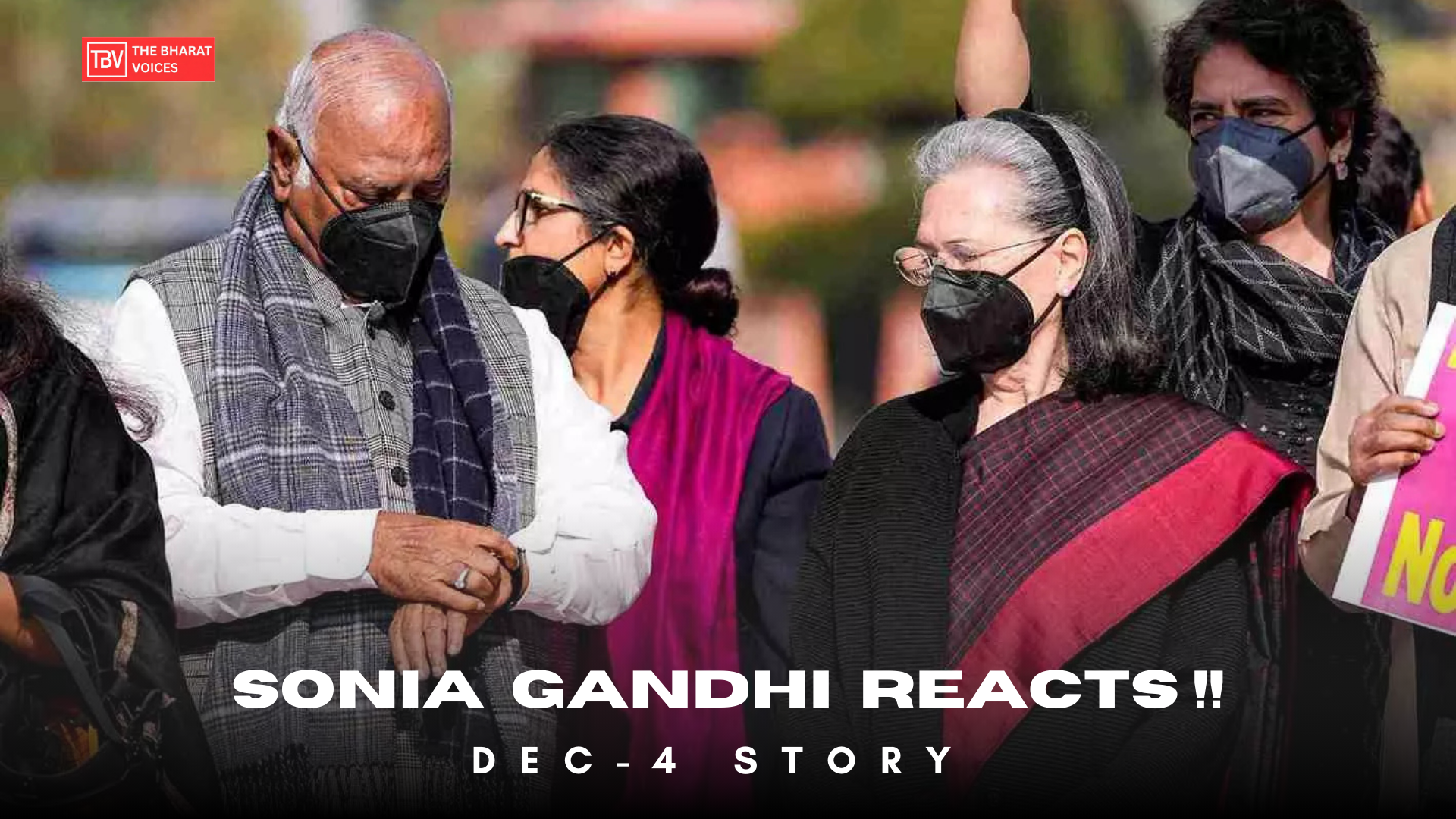
Sonia Gandhi, speaking to reporters after the protest, said plainly: “It is the government’s responsibility to do something — children are dying, and elderly people like me are finding it difficult to breathe.” Her words reflect an attempt to convey the human toll behind the statistics: this crisis isn’t just about smog or data, she argues — it’s about lives, lungs, public health.
But this protest isn’t a spontaneous reaction. Only a day earlier, her concerns had appeared in a strongly worded editorial. In that article, she described the toxic air in Delhi–NCR as a “slow-moving public health tragedy” and placed blame squarely on the government’s environmental and regulatory policies. She warned that decades of environmental neglect — especially decisions that weaken protections for natural buffers like the Aravalli Range — have turned a recurring seasonal problem into a full-blown emergency.
In her editorial, Gandhi also raised alarm over groundwater contamination, pointing to recent reports (including from the Central Ground Water Board, CGWB) which found elevated levels of uranium in water samples from Delhi, Punjab, and Haryana. She argued that air pollution, water contamination, and environmental mismanagement are not isolated issues — they’re all symptoms of a broken, misdirected environmental policy framework.
Specifically, she criticized several legislative and regulatory changes made over recent years — from loosened forest/conservation laws to diluted environmental impact assessment procedures — saying these changes have weakened oversight and opened the door to widespread ecological damage. She demanded that the government revoke or review these changes, restore the authority and independence of the National Green Tribunal (NGT), and implement coordinated, national-level action involving pollution control, ecological protection, and groundwater safeguarding.
Back in Parliament, the protest on 4 December appears to mark the beginning of a new political push on the issue. Opposition MPs have also moved for an adjournment motion in the Lok Sabha, demanding a full debate on the deteriorating air quality and calling for the government to declare the crisis a “national health emergency.”
In short, the key elements of Sonia Gandhi’s stance are:
The air-pollution crisis in Delhi–NCR is no longer seasonal — it has become a systemic environmental and public-health emergency.
The present government’s policies — especially those relating to conservation, environment, and groundwater regulation — have contributed significantly to the crisis.
Mere advisories and statements are insufficient; the government must take decisive, coordinated, and long-term actions.
The government must restore regulatory institutions (like the NGT), strengthen environmental laws, and treat pollution with the urgency it deserves.
Above all, the affected people — especially children, elderly, the medically vulnerable — must not be forgotten.
Sonia Gandhi’s intervention — both through her article and public protest — aims not only to highlight the severity of the crisis but also to force political accountability. With rising public awareness and mounting health concerns, this could mark a pivot point in how Delhi’s pollution problem is addressed at a national level.
